Pearson Edexcel · A-Level · English Literature
Course version: 9ET0 · Version from Sept 2015
Poetry – Section A: Post-2000 Poetry – Poems of the Decade: An Anthology…
Full specification wording
Component 3: Poetry – Section A: Post-2000 Poetry – Poems of the Decade: An Anthology of the Forward Books of Poetry 2002–2011: The Lammas Hireling Ian Duhig
Ian Duhig’s ‘The Lammas Hireling’ is a dramatic monologue steeped in rural folklore, exploring guilt, transgression, and the supernatural.
Checked against the Pearson Edexcel 9ET0 specification (opens in a new tab) on .
- Point 7 of 20
- 4 key terms
Study notes
From the checked teaching notes for this specification point.
The idea
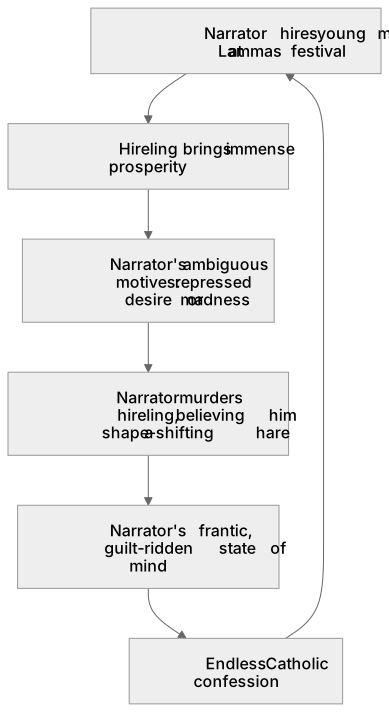
Ian Duhig’s ‘The Lammas Hireling’ is a dramatic monologue steeped in rural folklore, exploring guilt, transgression, and the supernatural. The poem follows an unreliable narrator who hires a young man at the Lammas festival, initially bringing immense prosperity. Driven by ambiguous motives—potentially repressed desire or madness—the farmer murders the hireling, believing him to be a shape-shifting hare. Duhig uses enjambment and a cyclical structure to reflect the narrator’s frantic, guilt-ridden state of mind, culminating in his endless Catholic confession.
What earns the marks
- Analyse the use of the dramatic monologue form to create an unreliable and deeply troubled narrator.
- Evaluate the integration of pagan folklore (the shape-shifting hare) and traditional Christian imagery (the confession).
- Explore the use of enjambment and stanza structure to reflect the narrator's psychological unravelling.
- Discuss the deliberate ambiguity surrounding the narrator's motives, including hints of repressed sexuality and madness.
Common mistakes and how to put them right
Treating the events of the poem as literal truth.
Put it right: Analyse the text through the lens of an unreliable narrator whose guilt or madness distorts reality.
Overlooking the significance of the title.
Put it right: Explain that 'Lammas' roots the poem in a specific harvest festival, blending pagan and Christian traditions.
Ignoring the auditory qualities of the poem.
Put it right: Discuss the use of dialect, alliteration, and internal rhyme to create a hypnotic, incantatory rhythm.
Exam tips
- Pair this poem with others that explore guilt, the supernatural or unreliable narrators, such as 'Giuseppe'.
- Track the syntax across stanza boundaries: each sentence runs into the next stanza, sustaining the speaker's unstable, compulsive account.
- Read 'casting ball from half-crowns' as the making of silver bullets: it shows continuing fear of supernatural return, while the final confession reveals guilt that no repeated absolution has settled.
Try the lesson
The start of the Component 3: Poetry – Section A: Post-2000 Poetry – Poems of the Decade: An Anthology of the Forward Books of Poetry 2002–2011: The Lammas Hireling Ian Duhig lesson, made from checked teaching notes for this specification point.
Have a go first
In Ian Duhig's 'The Lammas Hireling', what is the primary reason the narrator initially values the hireling?
Listen
Ian Duhig’s ‘The Lammas Hireling’ is a dramatic monologue steeped in rural folklore, exploring guilt, transgression, and the supernatural. The poem follows an unreliable narrator who hires a young man at the Lammas festival, initially bringing immense prosperity. Driven by ambiguous motives—potentially repressed desire or madness—the farmer murders the hireling, believing him to be a shape-shifting hare. Duhig uses enjambment and a cyclical structure to reflect the narrator’s frantic, guilt-ridden state of mind, culminating in his endless Catholic confession. A strong answer earns marks for these points. Analyse the use of the dramatic monologue form to create an unreliable and deeply troubled narrator. Evaluate the integration of pagan folklore (the shape-shifting hare) and traditional Christian imagery (the confession). Explore the use of enjambment and stanza structure to reflect the narrator's psychological unravelling. Discuss the deliberate ambiguity surrounding the narrator's motives, including hints of repressed sexuality and madness. A common slip: Treating the events of the poem as literal truth. Instead, Analyse the text through the lens of an unreliable narrator whose guilt or madness distorts reality. Exam tip: Pair this poem with others that explore guilt, the supernatural or unreliable narrators, such as 'Giuseppe'.
See it
Key words
Say what each word means before you turn the card.
Guilt and confession
Try answering aloud or in your head before turning the card.
The supernatural and folklore
Try answering aloud or in your head before turning the card.
Repressed desire and transgression
Try answering aloud or in your head before turning the card.
Rural life and isolation
Try answering aloud or in your head before turning the card.
See every definition
- Guilt and confession
- The narrator is guilt-ridden and ends in endless Catholic confession, revealing guilt that no repeated absolution has settled.
- The supernatural and folklore
- The poem is steeped in rural folklore, with the farmer believing the hireling to be a shape-shifting hare.
- Repressed desire and transgression
- The narrator's ambiguous motives may include repressed desire or madness, and the poem explores transgression.
- Rural life and isolation
- Dialect and archaic language ground the text in a specific, yet mythic, rural setting.
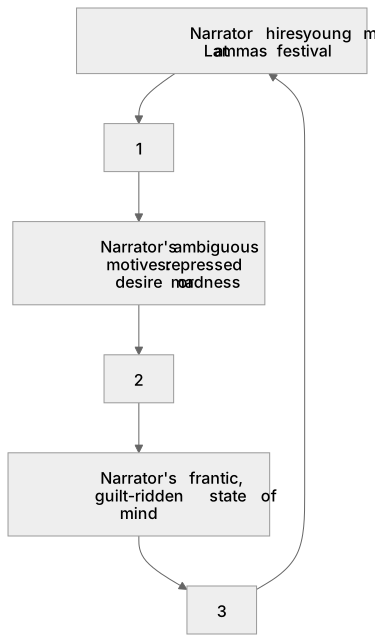
Label the diagram
Some boxes have lost their names. Pick the right name for each number.
1Box 1
2Box 2
3Box 3
There is more to this lesson
The full lesson goes on to check your understanding and help you earn the marks. Create a free account to carry on, with your progress saved.
A week of Premium from your first lesson · Then the free plan continues · No card, no charge
Test your understanding of Component 3: Poetry – Section A: Post-2000 Poetry – Poems of the Decade: An Anthology of the Forward Books of Poetry 2002–2011: The Lammas Hireling Ian Duhig
Active recall beats re-reading. Take an instant quiz now to test what you’ve learned and lock it into long-term memory.
A week of Premium from your first lesson · Then the free plan continues · No card, no charge